
Practical guidance and honest advice to help you reset, rebuild, and refocus.
In January, I wrote about how career setbacks can shake our confidence—and how to bounce back. This is for anyone facing a setback, whether you work in an office, a job site or a classroom. Since then, the topic has become far more personal. In just the past few days, I’ve spoken with over a dozen professionals who suddenly found themselves on the job hunt. Layoffs. Restructuring. Budget freezes. It’s happening across industries. Most of them felt shame and panic, even though it hadn’t been their fault. This moment does not define your worth or your future.
Getting laid off can feel like a punch in the gut. Whether you saw it coming or it hit out of nowhere, it’s disorienting, humbling, and financially terrifying. If you’re in that place right now, I’m not here to sugarcoat it. I’ve been there too.
Given the moment we’re in, I decided to update the original article. The story still matters, but so does getting specific about what to do right now when you’re facing an unexpected job search. I go much deeper into the actionable steps you can take to make the most of the hard situation. This one goes deep because you deserve real advice, not platitudes. Stick with me, and it will be worth it!
Note: This post is focused on building relationships and making the most of your network during a career transition. If you’re looking for advice on résumés, cover letters, or how to stand out in applications, stay tuned—I’m working on a follow-up post that will cover exactly that.
The Story
The thought of a career setback gives many of us anxiety. A colleague recently shared that she had been caught off guard and unexpectedly back on the market. She was unsure what to do next.
Her story reminded me of a time when I lost my job. It was during the Great Financial Crisis, which dramatically impacted our business. Our pipeline had dried up, and we relied on a single-client relationship to keep us afloat. The owner did everything he could to ensure we survived, but it was a tough time for everyone.
At that point, I wasn’t performing at my best. I had just moved to New York City and was adjusting to the fast-paced and new environment. One night, after staying out late, I overslept and was late for work. That was the final straw for my boss. He asked me to take a couple of days off. When I came back on Monday, I was met with shocked looks from my team. After some hesitation, the office manager approached me and informed me that I had been terminated the week before. I was crushed and unsure of what to do next. Whether you’ve been on your feet for 10 hours a day or behind a desk, it can feel like the floor’s been pulled out from under you. No matter your uniform, that disorientation is real.

To save face, I told my roommates it was the economy and definitely not me. But I knew the truth. Looking back, I wish I had been honest with myself about the reality of the situation.
That day, I went home and reflected deeply on my life and career. I questioned whether I could make it as an engineer. After speaking with family, friends, and mentors, I made a few critical decisions: I wouldn’t give up on my engineering career, I would make better choices about how I spent my time, and I would take full responsibility for my actions.
In the weeks that followed, I focused on networking and learning. I contacted old colleagues and managers, meeting them in person and over the phone to explore opportunities. When I wasn’t networking, I was preparing for the Fundamentals of Engineering (FE) exam, an important step in my career. Within a few months, I had a breakthrough. A new firm was looking for someone with my skills and background, and I landed the job. Then, I passed the FE exam.
Looking back, I realize that losing my job, though painful, was an opportunity in disguise. It forced me out of my comfort zone and to reassess my priorities. I reconfirmed the direction I wanted to take in my career, strengthened my network, and advanced my professional qualifications. Most importantly, I kept going. Giving up would have set me back even further.
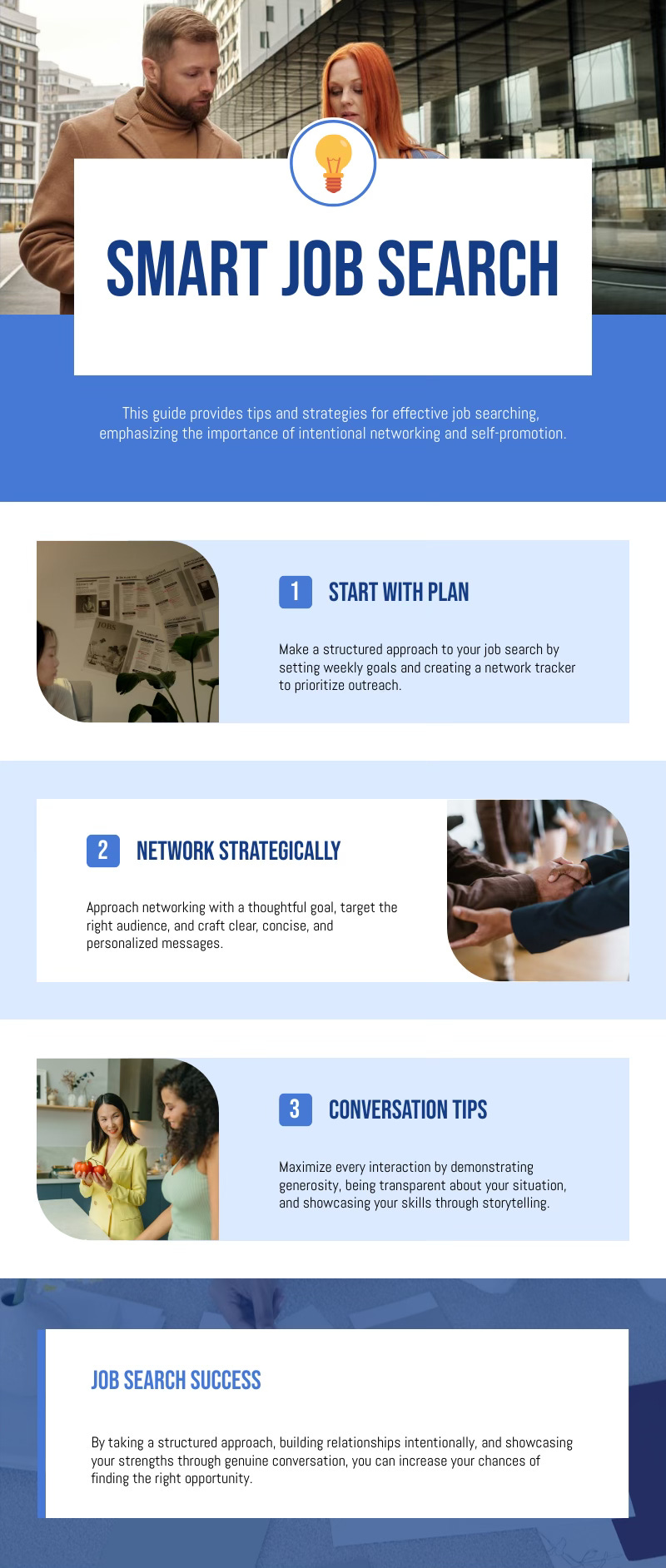
If you’re job searching right now, here’s what I recommend:
1. Start with a plan
Before you fire off résumés or scroll job boards, take a moment to step back and structure your approach. When everything feels uncertain, making a plan can help you regain a sense of control. Remember, not every field runs on resumes and LinkedIn. But every field runs on relationships. You never know who could be the one who opens the next door. It could be a foreperson who knows which crews are hiring, a client who said they’d love to work with you again, or a coworker who moved to another shop. These connections matter. Tap into them.
Here’s where to begin:
- Build your relationship trackerThink back on people you’ve had strong work relationships with. People like former colleagues, managers, mentors, and clients. Create a simple spreadsheet to track:
- Names & contact info
- Industry or field (especially if it aligns with your interests)
- Whether they have great networks or hold leadership positions
- Last time you connected
- Notes for outreach (e.g., shared experiences, relevant news)
- Set weekly goalsFor example:
- Reach out to 3–5 people each week from your tracker
- Apply to 2–3 roles that truly fit.
- Spend 1 hour/day developing a new or sharpened skill. Even 15 minutes a few times a week can make a difference. If you’re juggling caregiving or other jobs, it’s okay to start small. What matters is momentum.
- Add structure to your daysJob searching can feel overwhelming without rhythm. Start each day with a task list and end it by reviewing your tracker and priorities for tomorrow.
2. Network like a strategist
Networking isn’t about sending out a wave of generic messages. It’s about building relationships through clear, thoughtful communication. That starts with a strategic approach to how you reach out.
Use this simple framework to guide your outreach:
Step 1: Goal
What do you want from the conversation?
Are you asking for insight into the industry? A referral? Feedback on your résumé? Select one realistic and specific goal for each person you contact.
Step 2: Audience
Write down everything you know about your contact. Who are you speaking with, and what do you know about them?
- What is their background or area of influence?
- What experiences do you share?
- What might resonate with them?
- What might get their attention?
Then ask: Does this change the goal?
Step 3: Message
Make your message:
- Brief and respectful of their time
- Clear about your context (“I’m navigating a career transition and exploring X…”)
- Anchored in genuine interest or gratitude (“I’ve always valued your perspective on Y…”)
- Concludes with a simple, actionable request (e.g., “Would you be open to a 15-minute call next week?”)
When you complete your message, cross-check it against your goal and the audience. Does your message help you to achieve that goal?
Step 4: Messenger
What will this person think of you?
Are you a former colleague? A stranger? Consider how you’re likely to be received. If the connection is weak, how can you build quick credibility and relevance?
Use this reflection to revisit your goal and message.
Step 5: Medium
How will your message reach them?
Is it an email? LinkedIn message? Handwritten note? Make sure:
- They’ll see it
- They’ll read it
- They’ll know what to do next
Then check your whole message again—does it align with your goal, your audience, and your medium?
Pro tip #1: The more intentional you are with outreach, the more likely you are to get a response. Remember, you are trying to build a relationship that lasts beyond your job search.
Pro tip #2: Never directly ask for a job.
It puts the other person on the defensive and makes them feel cornered. Even if they wanted to help, they may shut down. Instead, ask for insight, advice, or perspective—and let any opportunity emerge naturally from the conversation.
3. Make the most of every conversation
Once someone agrees to connect, don’t wing it. Thoughtful preparation—and how you show up—can turn a short coffee chat into a long-term ally.
Before the meeting, take five minutes to revisit the strategic communication framework:
- What’s your goal for the conversation?
- What do you know about your audience?
- How will you structure your message to resonate?
- What might they think of you—and how can you adjust?
- What’s the best medium for follow-up?
A little prep goes a long way. You’ll feel more confident, and your conversation will be more focused and impactful.
Here are a few ways to make each interaction meaningful and memorable:
Lead with generosity
We’re wired for reciprocity. When someone helps us, we instinctively want to return the favor. You can tap into this dynamic by showing up with a small gift:
- Buy the coffee or bring a snack
- Share an article or idea related to their work
- Offer advice or a helpful intro of your own.
- Even if you’re early in your career or feel like you don’t have much to offer, your perspective, gratitude, or feedback can be a meaningful way to connect.
This is not about being transactional. It’s about showing that you value their time and want to contribute, too.
Be a human
Yes, this is a professional conversation. But don’t be afraid to talk about your life outside of work:
- Share a personal story or update
- Ask about their family, hobbies, or how they’re really doing
- Talk about your hopes and your fears
That emotional connection often matters more than your résumé. People don’t help résumés, they help people they remember, relate to, and care about.
Nail the small talk
Small talk isn’t fluff. It’s a warm-up that helps both people relax and makes the real conversation flow more naturally. It also opens the door to authentic connection.
To make your small talk count, aim for an emotional connection and empathy. If you are struggling to make a conversation, try this simple framework:
- Ask a follow-up question about something they just shared. Ask them for an explanation of something they just said. Or ask them about one specific thing they just spoke about.
- If the conversation doesn’t naturally build, ask:“What was the most meaningful part of that for you?” Look for something to connect with after this question.
- Still no momentum? Ask:“How did that part make you feel?”
These questions challenge the other person to reflect and give you something human to connect with. You’re not just making small talk, you’re building trust.
Be transparent, but not desperate
Let them know you’re exploring new opportunities due to an unexpected change. Don’t sugarcoat it, but don’t make it a plea, either. You’re not asking for a job. You’re inviting perspective, feedback, and ideas. You want advice and guidance.
That honesty builds trust, and it opens the door to the right kind of help.
Don’t state your skills. Signal them.
Anyone can say they’re a “strategic thinker” or a “team player.” It’s better to show, not tell. For example:
- Instead of “I’m a continuous learner,” say:“While I’ve been job searching, I’ve taken the opportunity to go deep into sustainability reporting frameworks, especially around the new SEC climate disclosure rule. I’ve noticed a lot of firms are struggling to connect ops with ESG metrics.”
- Instead of “I’m a great team player,” say:“In my last role, I led a cross-functional group across engineering, ops, and finance. We ended up reducing rework by 30% because we built a shared playbook together.”
- Instead of “I’m strategic,” say:“I’ve been treating this job search like a consulting project. I set clear goals, mapped out stakeholder relationships, and am trying to learn fast from all of my network.”
These stories make your strengths concrete and far more memorable than a list of buzzwords.
Keep the momentum going
If the conversation goes well and there’s rapport, don’t be afraid to ask a powerful question before wrapping up:
- Is there anyone you think I should talk to? Someone who might be a good guide or sounding board as I continue my journey?
This keeps things open-ended and non-pushy, while giving your contact a chance to connect you with someone in their network. People often want to help, but they don’t always know how. This question gives them a clear, actionable way to support you.
If the connection isn’t as strong or it feels too early to ask for a referral, try this instead:
- I’d love to keep learning. Is there a book, podcast, or video you’d recommend that helped you get to the next level?
Then actually do the thing. Read the book. Watch the video. Reflect on what stood out.
When you follow up (and you should!), make it more than a thank-you. Try something like:
- I read that book you mentioned—this part really stuck with me: [insert insight]. I’ve been thinking about how it applies to my next steps, and I’d love to bounce a few thoughts off you if you’re open to a quick follow-up chat.
This keeps the tone low-pressure but purposeful. You’re showing you took their advice seriously, and you’re inviting a deeper connection without asking for a big commitment. If they’re open, you’ve just created the perfect bridge to a second, richer conversation.
Keep going. It gets better.
Career setbacks sting. They raise questions about our identity, our worth, and our future. But they also present an opportunity: to reflect, realign, and rise stronger.
If you’re in this season right now, remember that you’re not alone. Whether your last paycheck came from a tech company or a trades gig, you deserve a path forward. Take what fits, adapt what doesn’t, and know you’re not alone. Build your plan. Reach out intentionally. Invest in yourself. And whatever you do: don’t stop moving forward.
What about you?
Have you been through a career setback before? Or are you going through one now? Share your story or advice in the comments. Let’s support one another—and make this community a place where people can land on their feet.

 Ambitious engineer
Leave a comment